Optiflow
My mechanic wanted to learn about AI and didn't know where to start. So we started simple, with the thing that was costing him work.
- Collaborators
- Adam Bishop, mobile mechanic since 2003
- Scope
- Discovery, design, build, and the Notion back office
- Built with
- HTML, CSS and JavaScript, Netlify Functions, the Notion API, Playwright, Claude
- Timeline
- 2026. Live once his client book is in Notion
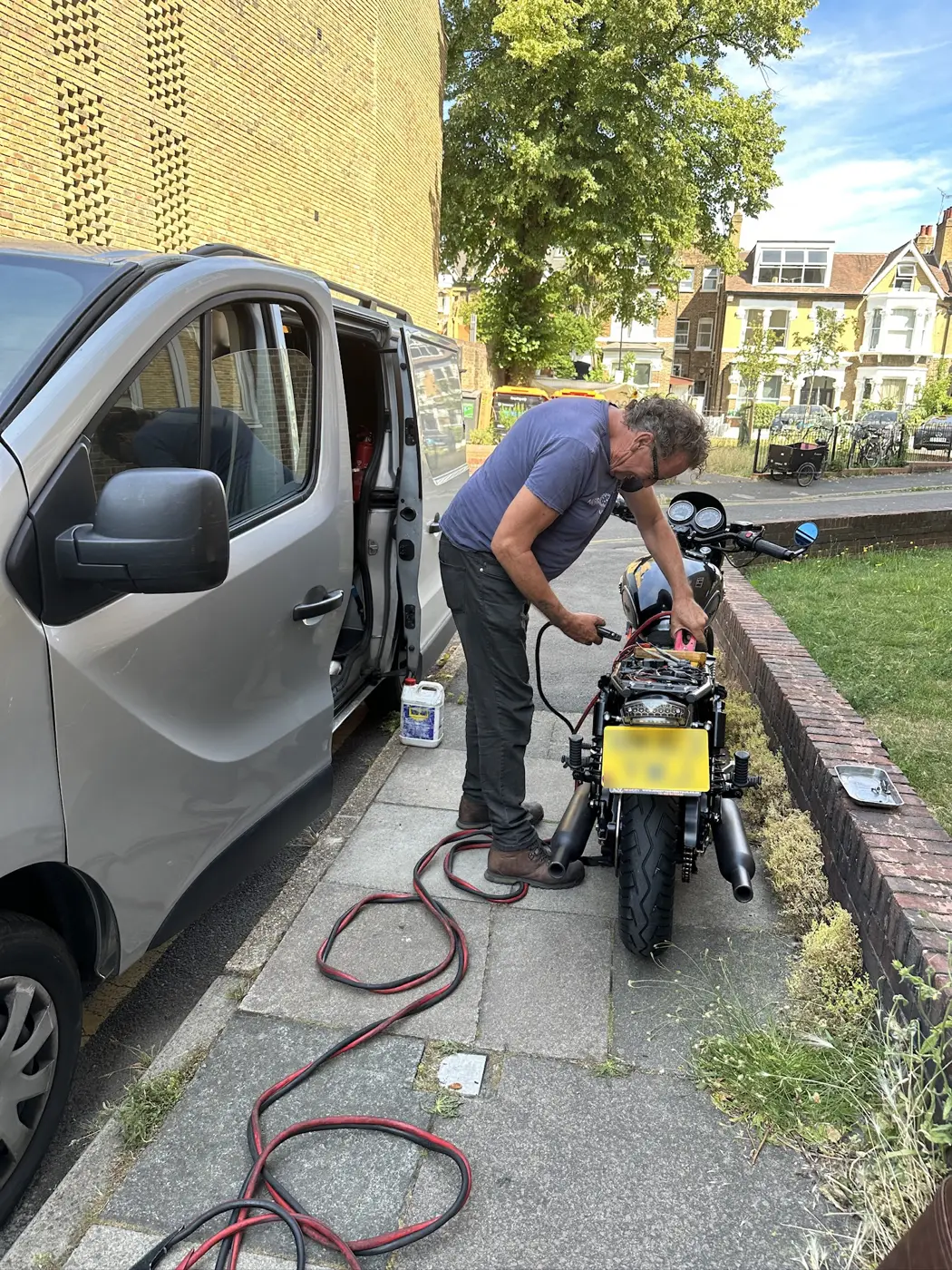
My Bonneville, and the man with the van.
I ride a 2013 air-cooled Triumph Bonneville. Not exactly old, not exactly brand spanking new, and every so often she decides she's done for the day. When she does, I ring Adam from Optiflow. He turns up at the kerb with his van and his tools and sorts her out right there.
Adam has been fixing bikes across London and the South East since 2003, and he's rated 4.8 on Google from 59 reviews. His website told a different story. It was last touched in 2017, shrank to a thumbnail on a phone, and the only way to reach him was an email link. Most of his customers find him the way I did, standing next to a bike that won't start.
Adam had been curious about AI for a while but didn't know where to start. So we started with the thing that was costing him work. He had one rule: it still has to look and feel like Optiflow.
I captured every page before I changed anything.
I crawled all eight pages with Playwright, including two that weren't in the nav, and saved full-page screenshots at desktop and phone sizes. That gave me a record to design against, and a fair before and after.
no viewport tagPhones render the full desktop page and shrink it to fit. There's no mobile layout.mailto:No contact form. A rider who has broken down has to write an email.dropdown.js → 404The menu script no longer exists, so the dropdowns never open.*.swfThe interactive carburettor and brake models are Flash. No current browser can play them.
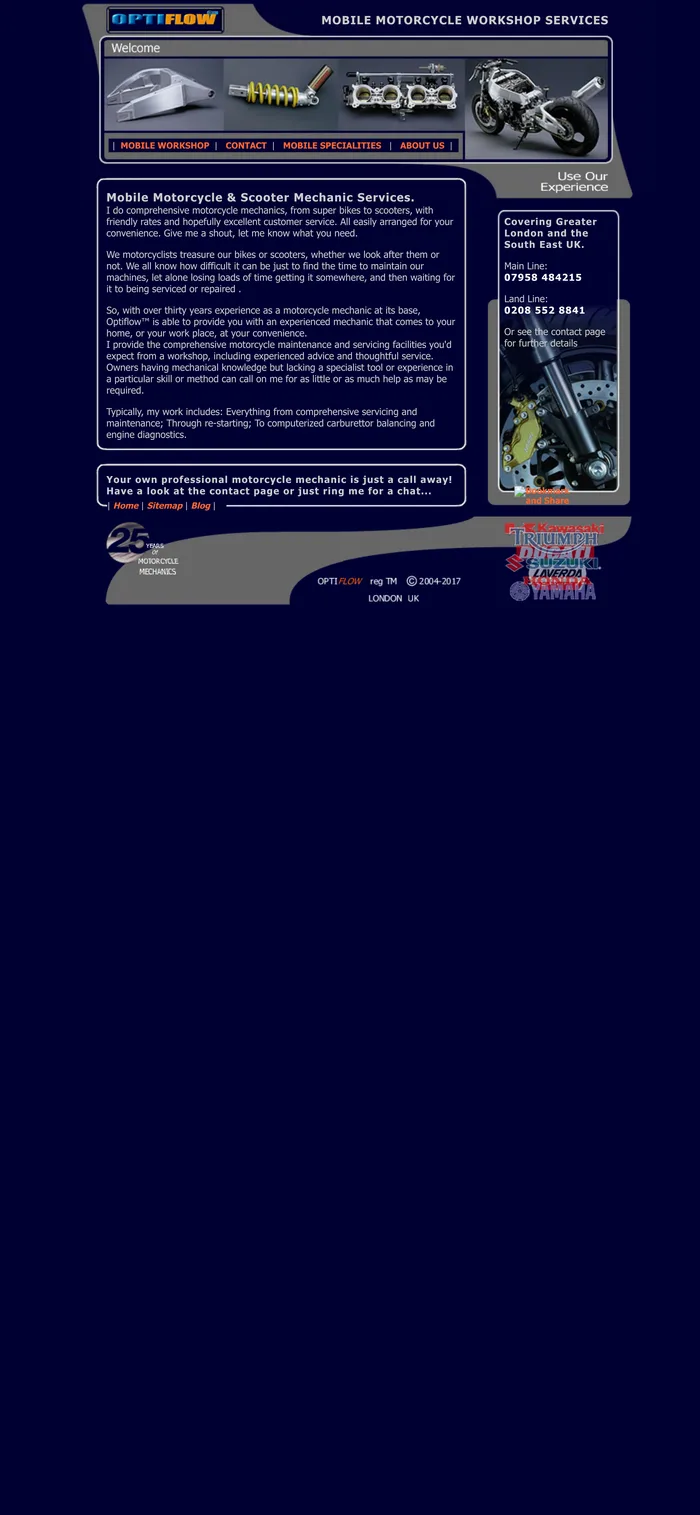
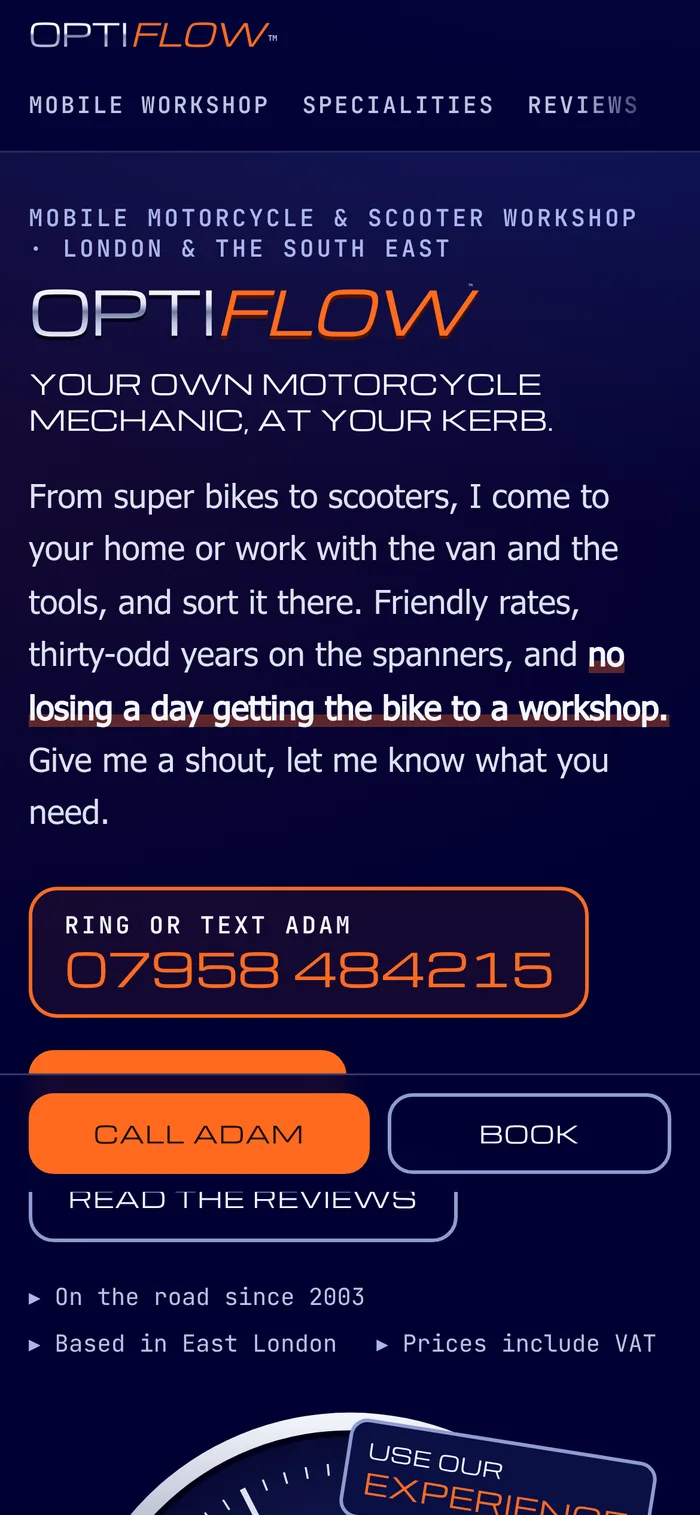
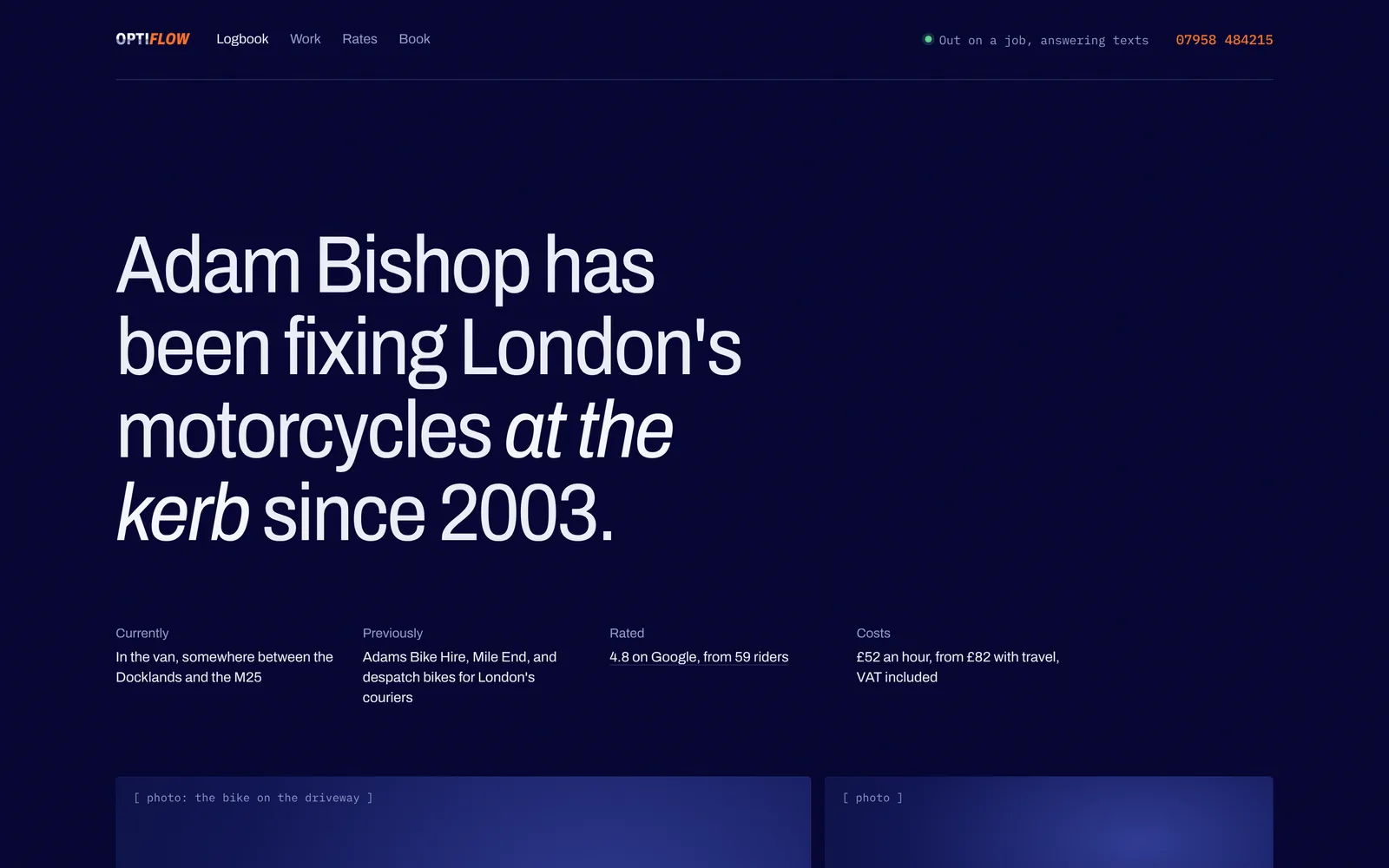
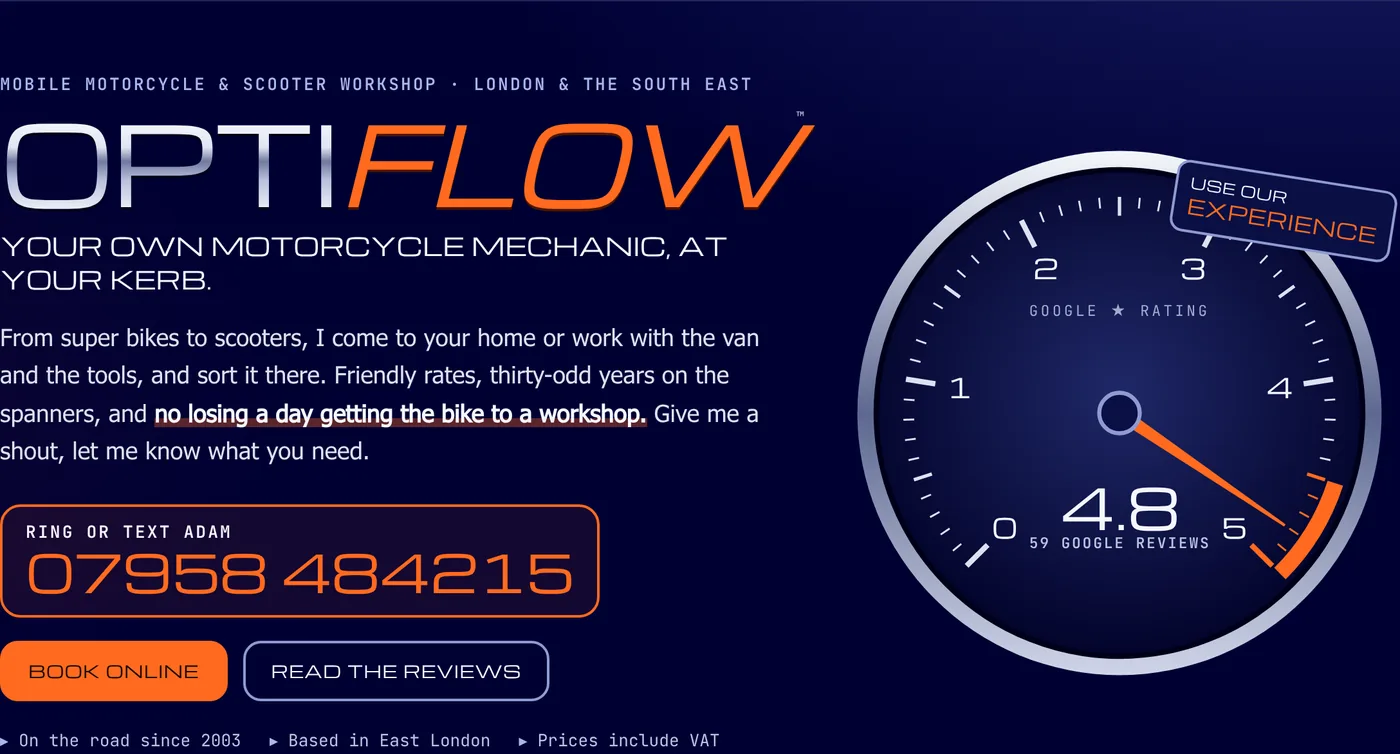
On the old site the phone number was 8pt grey text. Now it's the biggest thing on the screen after his name.
It still has to look and feel like Optiflow.
Any modern template would fix the phone problem, and make Optiflow look like every other trade site. So I treated the old site as a brand guide and redrew it. The navy is #000033, copied from his 2004 stylesheet. The chrome-and-orange wordmark is now live type. Tahoma, the font his site has used since 2004, still does the body text.
My first pass was a tidy, minimalist layout. Next to the old site it was obvious what it had lost, so I went back to the bike-magazine chrome.
Start with where the work goes.
Before AI can help Adam, his work has to live somewhere a tool can read it. Bookings used to happen over text, and the details lived in his head. So the first step is three small pieces, each doing one job for him.
- An enquiry form that asks what he needs to quote: the postcode, the bike, how soon, and whether there's somewhere to work on it. If someone picks “Broken down now”, it tells them to ring him straight away.
- Every enquiry lands in Notion as a job card, linked to the client and the bike. The key stays on the server and can only add rows.
- A “Coming up” view tells Adam who to text this month, worked out from the date and mileage of each bike's last oil change, tyres, chain, pads and MOT.
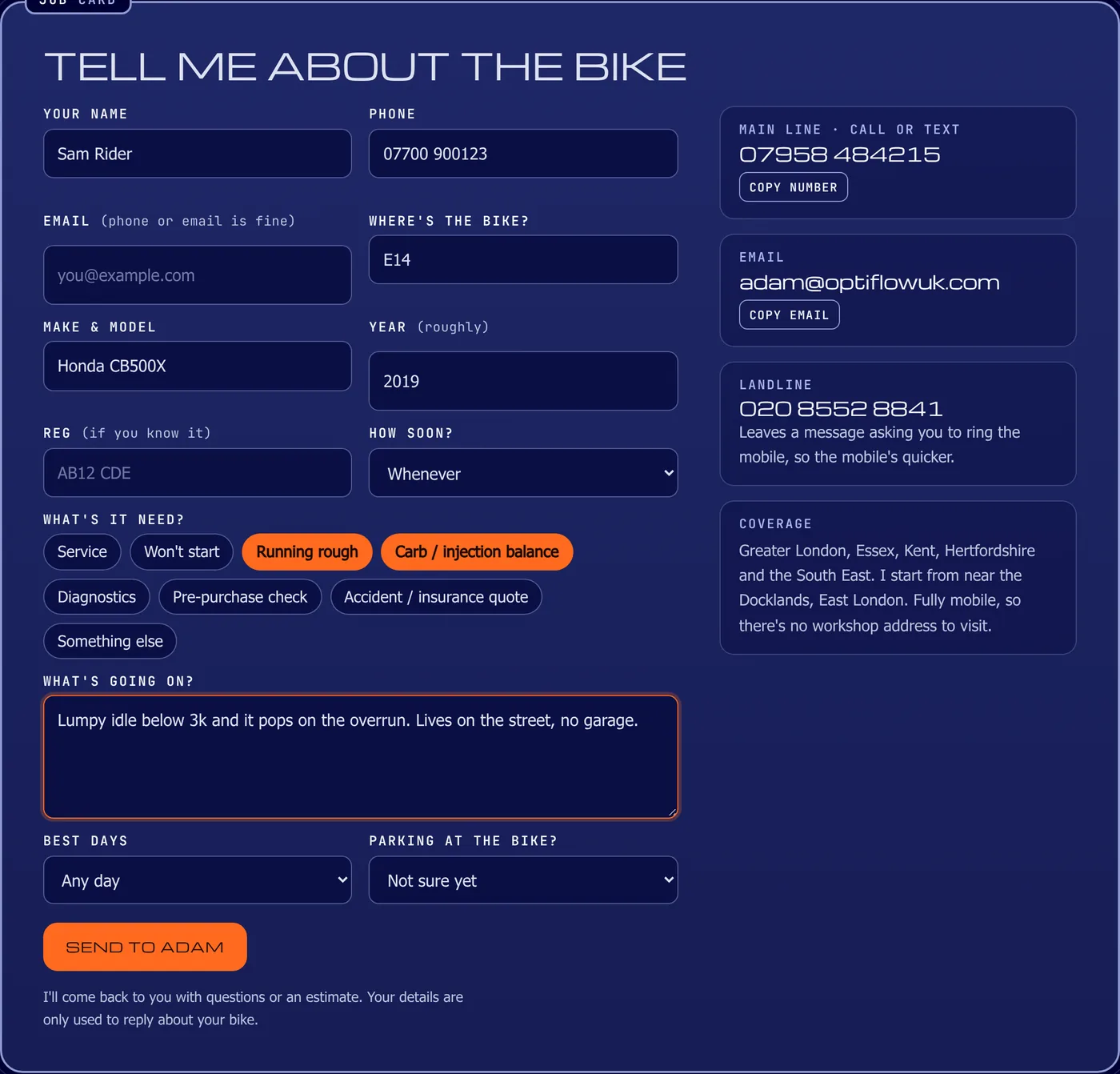
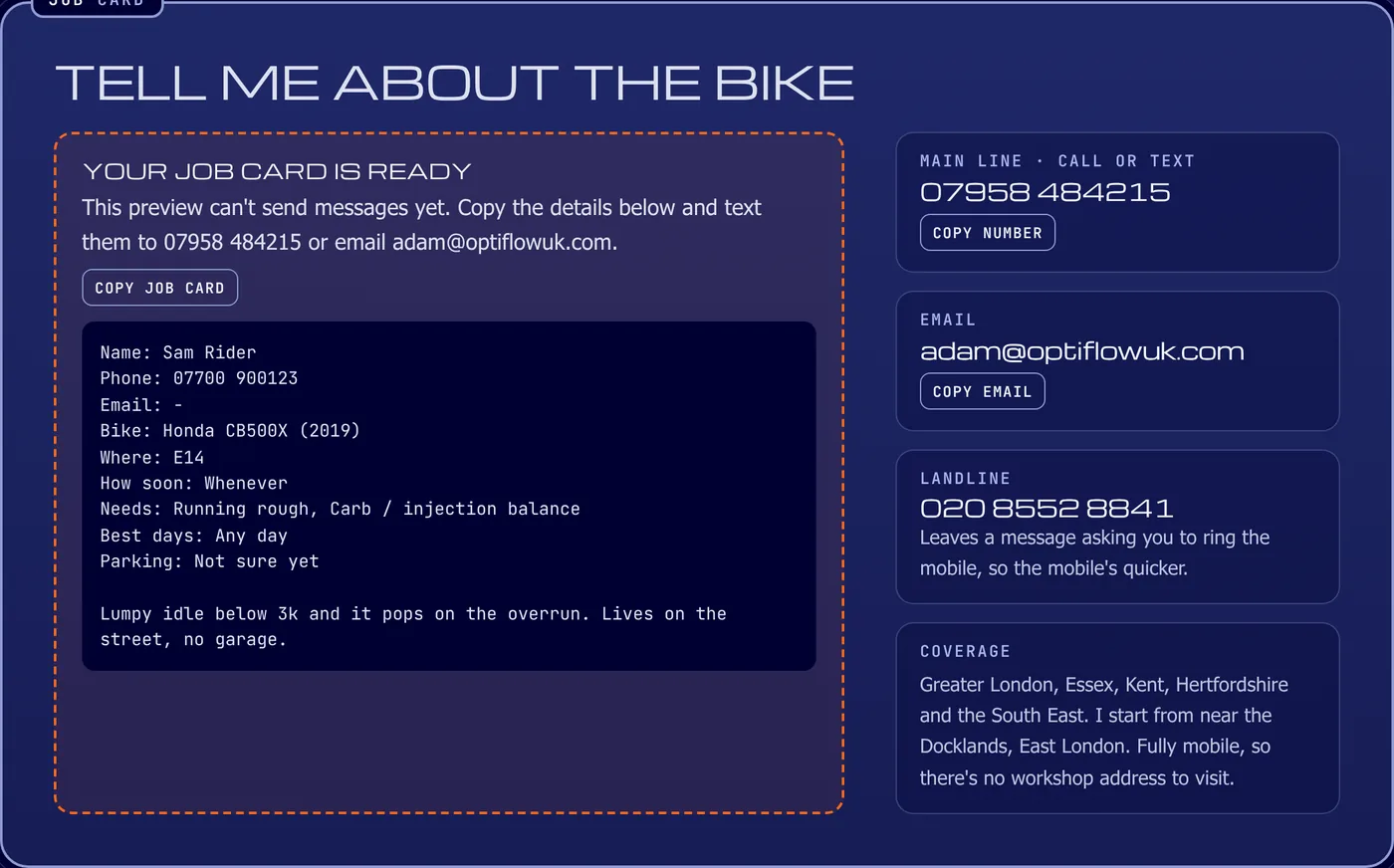
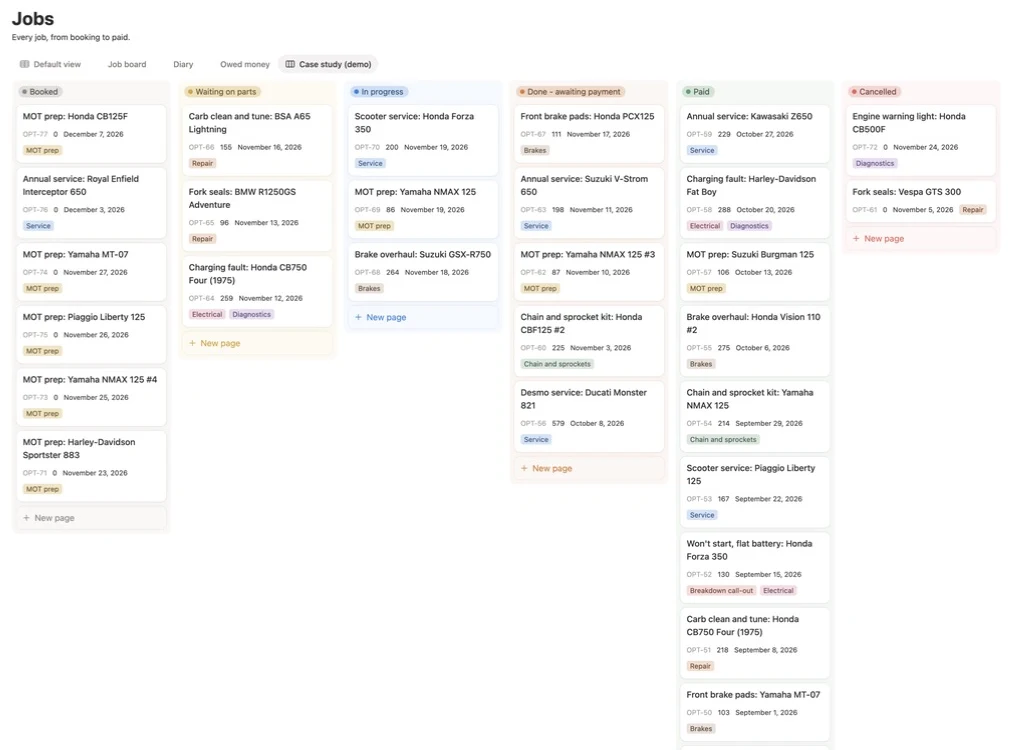
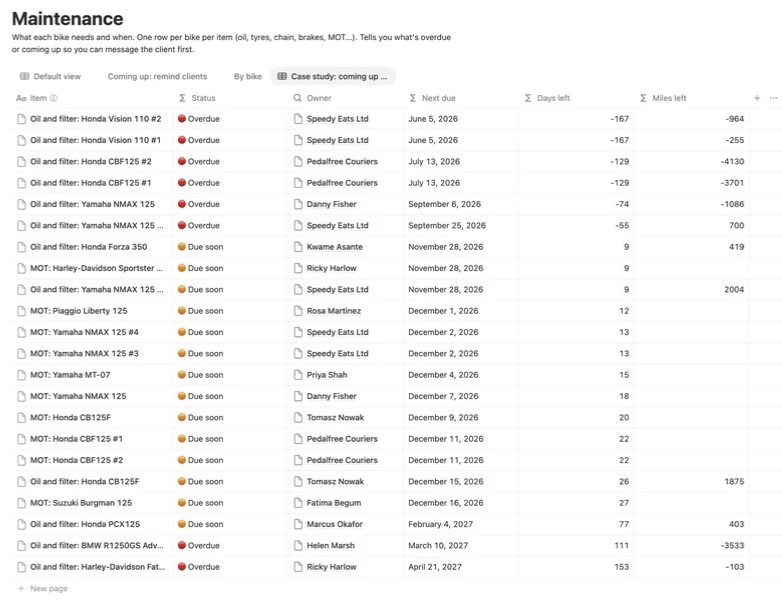
All the people, bikes and jobs shown are invented. Each demo row in Notion is ticked “Demo”, so Adam can clear them in one go.
Ready to go live, once his client book moves.
Twenty-odd years of customers live in Excel files, paper job sheets and old emails. We're moving that client book into Notion first, so the first enquiry lands in a system that already knows the rider and their bike.
Next: an automatic text when a bike's service or MOT is due, using the maintenance tracker, and Adam's own photos of real jobs on the site.